
Bathroom Accessories vs Bathroom Hardware: What’s the Difference?
When sourcing products for bathroom construction or wholesale procurement, the distinction between bathroom accessories vs bathroom hardware often causes confusion among buyers. These terms appear side by side in catalogs and supplier lists, yet they represent two fundamentally different product categories with distinct functions, installation methods, and supply chain requirements.
For procurement professionals, OEM partners, and bathroom contractors, getting this distinction right is not just a matter of semantics—it directly affects ordering accuracy, project specifications, and the overall quality of finished bathroom spaces.
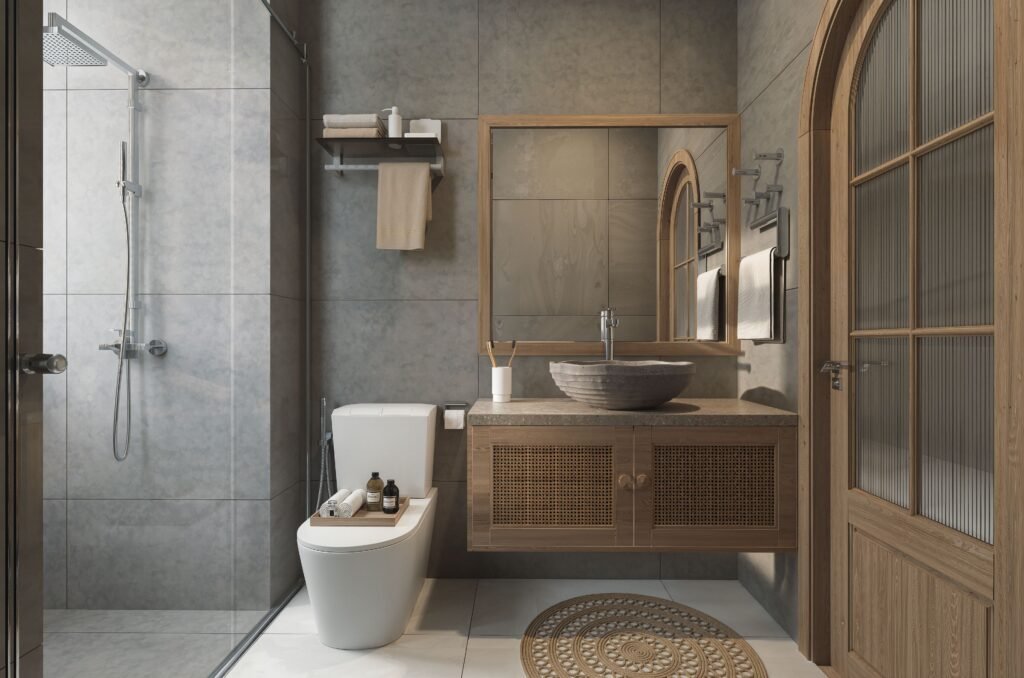
This guide breaks down exactly what separates bathroom hardware from bathroom accessories, with concrete product examples and practical insights for B2B buyers.
What Is Bathroom Hardware?
Bathroom hardware refers to the metal products used in constructing, maintaining, and decorating a bathroom space. These are the items that are solidly installed—typically mounted to walls, floors, or countertops with permanent fixtures.
The term “hardware” in this context comes from the broader builders’ hardware classification, which includes metal products used for protection, decoration, and convenience in buildings. Within the bathroom, hardware serves both functional and structural purposes, often involving plumbing connections or load-bearing wall mounts.
Common Bathroom Hardware Products
| Product | Description |
|---|---|
| Faucets | Hand-operated valves regulating water flow at sinks, bathtubs, and showers |
| Showerheads & Shower Systems | Overhead or handheld water delivery fixtures |
| Towel Bars | Wall-mounted horizontal bars in 18″, 24″, or 30″ lengths for hanging bath towels |
| Towel Rings | Circular holders typically mounted near vanities for hand towels |
| Toilet Paper Holders | Wall-mounted dispensers that secure and dispense toilet tissue rolls |
| Robe Hooks | Single or double hooks mounted on walls or doors for hanging robes and garments |
| Grab Bars | Support rails installed for safety and accessibility |
| Shower Valves & Drains | Plumbing components integrated into shower and bath systems |
Bathroom hardware is typically made from metals such as stainless steel, brass, zinc alloy, aluminum, and copper. Common finishes include chrome, brushed nickel, matte black, and oil-rubbed bronze, with manufacturing processes like polishing, electroplating, and brushing. For a complete selection of these items, browse our full range of bathroom hardware products.
【Insert Image Here】 – A close‑up wall display of typical bathroom hardware: towel bar, toilet paper holder, and robe hooks mounted together.
Alt Text: Wall‑mounted bathroom hardware set including towel bar and toilet paper holder
What Are Bathroom Accessories?
Bathroom accessories encompass a broader range of items—the “extras” that complete a bathroom beyond its permanent fixtures and hardware. These are products that enhance the functionality, organization, and aesthetic appeal of a bathroom space.
Industry definitions describe bathroom accessories as non-plumbing fixtures and fittings designed for organization, hygiene, and convenience within bathroom spaces. Unlike hardware, accessories can generally be added, removed, or replaced without structural work or plumbing modifications.
Common Bathroom Accessories
| Category | Examples |
|---|---|
| Storage & Organization | Shelves, shower caddies, cabinets, laundry baskets |
| Soap & Dispensing | Soap dishes, soap dispensers, pump bottles |
| Hygiene | Toilet brushes and holders, plungers |
| Personal Care | Toothbrush holders, tumblers/cups, cotton storage boxes |
| Waste Management | Waste baskets and bins |
| Mirrors | Non-medical, non-architectural bathroom mirrors |
| Shower Solutions | Shower curtains, rods, and rings |
| Floor & Safety | Bath mats, non-slip mats, grab rails |
Bathroom accessories are manufactured from a wide range of materials including plastics, metals, glass, and ceramics, serving both functional and decorative purposes.

The Key Differences: A Side-by-Side Comparison
To make the distinction between bathroom hardware vs accessories clear, here is how they compare across key dimensions:
Installation Permanence – Bathroom hardware is permanently installed—mounted to walls, floors, or countertops with screws, anchors, or plumbing connections. Removing hardware typically requires tools and may leave visible holes or require wall repair. Bathroom accessories, in contrast, can be freestanding, hung, or placed without permanent installation. Many accessories can be moved or swapped out in minutes.
Function – Hardware provides essential structural and plumbing functions: delivering water, supporting towels, holding toilet paper, ensuring safety. Accessories serve organizational, hygienic, and decorative purposes: holding soap, storing toothbrushes, hiding waste, adding style.
Connection to Utilities – Hardware items like faucets, showerheads, valves, and drains are plumbed into the water system. Accessories have no plumbing connections—they are surface-mounted or freestanding items.
Product Examples – Bathroom hardware includes towel bars, toilet paper holders, robe hooks, faucets, showerheads, and grab bars. Bathroom accessories include soap dishes, toothbrush holders, shower caddies, waste bins, bath mats, and mirrors.
Design Impact – Both contribute to bathroom aesthetics, but hardware tends to set the foundational metal finish (chrome, brushed nickel, matte black) that runs throughout the space. Accessories then layer on additional style, color, and texture, often complementing or contrasting with the hardware finish.
How Bathroom Hardware and Accessories Work Together
In practice, bathroom hardware and accessories are not competing categories—they are complementary layers of a complete bathroom specification.
Hardware establishes the structural foundation. When planning a bathroom project, hardware items like faucets, shower systems, towel bars, and toilet paper holders are typically selected first. Their finish—whether chrome, brushed nickel, matte black, or brass—sets the metal palette for the entire space.
Accessories then provide the finishing touches. Soap dispensers, toothbrush holders, waste bins, and mirrors are chosen to coordinate with or thoughtfully contrast against the hardware finish. Accessories can be updated more easily over time, allowing bathrooms to refresh their look without major renovation.
For B2B buyers and OEM partners, understanding this relationship is critical when fulfilling complete bathroom fit-outs. A project specified with mismatched hardware and accessory finishes can appear unprofessional and disjointed. Conversely, coordinated hardware and accessories signal attention to detail and quality—qualities that reflect well on the supplying brand.
Why the Distinction Matters for B2B Buyers
For procurement professionals, contractors, and bathroom product distributors, the bathroom hardware vs accessories distinction has practical implications that go beyond simple terminology:
Product Sourcing – Hardware and accessories often come from different manufacturing lines or even different factories. Hardware requires more robust metalworking, finishing, and sometimes plumbing certification. Accessories may involve broader material ranges including plastics, glass, and ceramics. Knowing which category you need helps you source from the right suppliers.
Specification Accuracy – When writing project specifications or responding to RFQs, using precise terminology prevents ordering errors. A “towel bar” is hardware; a “towel” is an accessory. A “soap dispenser” is an accessory; a “shower valve” is hardware.
Quality Expectations – Hardware typically demands higher durability standards—corrosion resistance, load-bearing capacity, and long-term reliability—given its permanent installation and frequent use. Accessories may have varying quality tiers depending on whether they serve purely decorative or daily-use functions.
Packaging & Logistics – Hardware items often require more protective packaging due to their weight, metal finishes, and potential for scratching during transit. Accessories may be more varied in packaging requirements depending on materials.
After-Sales Support – Hardware failures (leaking faucets, broken towel bars) typically require replacement or repair with potential plumbing involvement. Accessory issues are generally simpler to resolve—swap out the item and move on.
Choosing the Right Supplier for Your Bathroom Hardware and Accessories
When selecting a manufacturing partner for bathroom products, look for suppliers with demonstrated capabilities across both hardware and accessories. A supplier with integrated production—rather than outsourcing either category—offers several advantages:
Consistent Finishes – In-house production across hardware and accessories ensures finish matching across product lines, eliminating the color and sheen variations that can occur when sourcing from multiple factories.
Streamlined Logistics – Consolidating hardware and accessory orders from a single supplier reduces shipping costs, simplifies customs documentation, and minimizes coordination headaches.
Quality Control – Suppliers with unified quality management systems apply consistent standards across all product categories, from faucet brass composition to accessory plating thickness.
OEM/ODM Flexibility – Manufacturers with in-house R&D and production capabilities can develop customized hardware-accessory collections tailored to specific market requirements. Learn more about our OEM & ODM manufacturing capabilities.
KAWAL Sanitary, established in 1996 and operating from Nan’an, Fujian—one of China’s leading sanitary ware manufacturing hubs—maintains four specialized production bases covering hardware, ceramics, water tanks, and bathroom accessories. With over 60,000 m² of manufacturing facilities featuring advanced CNC machining and automated production lines, the company delivers integrated sanitary solutions for global B2B partners.
Final Takeaway
The difference between bathroom accessories and bathroom hardware comes down to installation permanence, function, and connection to utilities. Hardware is permanently installed, often plumbed, and serves essential structural purposes. Accessories are add-on items that organize, decorate, and complete the space.
For procurement professionals, understanding this distinction ensures accurate specifications, efficient sourcing, and successful project outcomes. And for manufacturers, delivering both categories with consistent quality and finish is the mark of a comprehensive sanitary ware partner.