
Toilet Flush Tank: A Complete Guide to How It Works
A toilet flush tank looks simple. A box of water, a button on top, and a pipe running to the bowl. The reality is different. Inside the tank, a fill valve and a flush valve work together in a sequence that repeats with every flush. The flush valve opens to release water into the bowl, and the fill valve closes to stop the refill at a precise level. When either valve fails, the symptoms point to a specific component.
This guide explains how a toilet flush tank works, the parts inside it, the different tank types, and the materials used to make them.
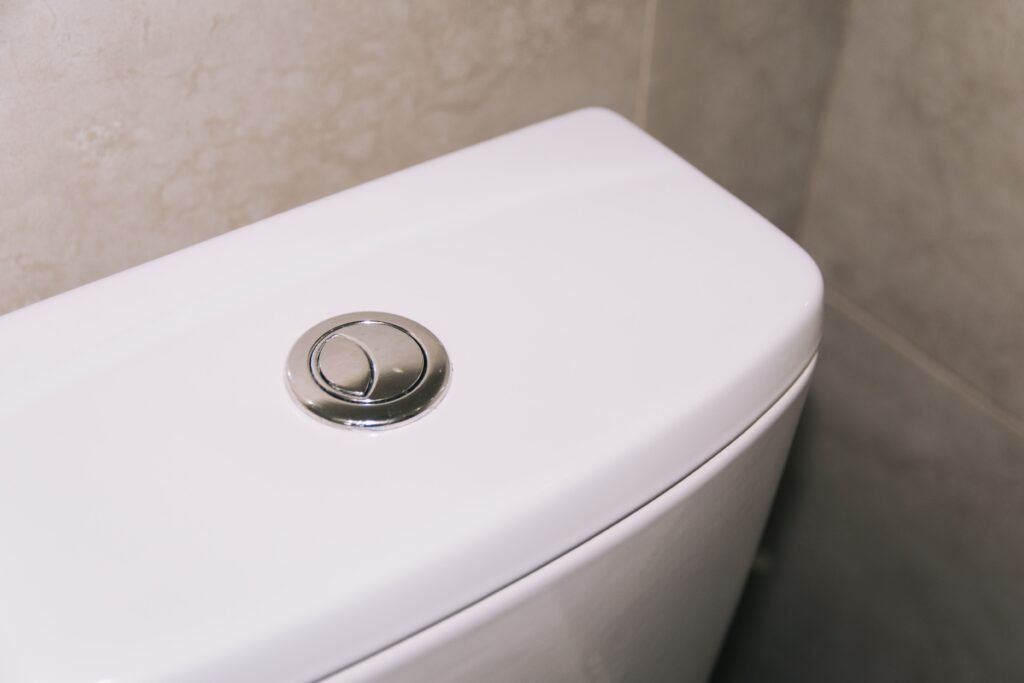
What a Toilet Flush Tank Does
A toilet flush tank stores water until the user activates a flush. Gravity drives the water into the bowl, creating the siphon or washdown action that clears the bowl contents and refills it with fresh water.
The tank does three things. It holds a measured volume of water. It releases that water at the right speed and volume to clear the bowl. It refills itself to the same level after every flush, so the next flush has the same water volume.
The mechanism relies on two valves working in opposite directions. The flush valve opens when the user presses the button or lever, then closes when the tank empties. The fill valve opens when the tank starts to refill, then closes when the water reaches the target level.
The Flush Valve: Releasing the Water
The flush valve sits at the bottom of the tank. It controls the flow of water into the bowl.
In a gravity tank, the flush valve is a flapper or a seal that seats against a drain opening. When the user presses the flush button, a lever or chain lifts the seal off its seat. Water flows through the opening into the bowl.
The seal stays lifted until the tank drains. As the water level drops, the seal loses buoyancy and settles back onto the drain opening, closing the valve. The tank then refills for the next flush.
In a dual-flush tank, the mechanism controls how far the flush valve lifts and how long it stays open. Pressing the full-flush button lifts the valve higher, so it takes longer for the seal to settle back and the tank drains completely. Pressing the partial-flush button lifts the valve less, so it reseats sooner and only part of the tank empties.
The Fill Valve: Refilling the Tank
The fill valve sits inside the tank, connected to the water supply line. It controls the refill.
When the tank is empty, the fill valve opens and water flows into the tank. A float or a pressure-sensing mechanism monitors the water level. When the water reaches the target level, the float rises and triggers the valve to close, stopping the flow.
The fill valve has two jobs beyond filling the tank. It also sends a small amount of water through a refill tube into the bowl, which refills the bowl’s water seal after the flush. Without this refill, the bowl would not have enough water to create a proper siphon on the next flush.
The fill valve is the most common source of tank problems. A fill valve that fails to close causes the tank to overflow or the water to run continuously. A fill valve that fails to open leaves the tank empty and the toilet unable to flush.
Dual-Flush Systems: Full Flush vs Partial Flush
A dual-flush tank has two buttons instead of one. The full-flush button releases the entire tank volume, typically 6 liters or more. The partial-flush button releases a reduced volume, typically 3 to 4.5 liters.
The mechanism that controls the difference varies by design. In one common design, the two buttons connect to different levers that lift the flush valve to different heights. The partial-flush lever lifts the valve slightly, so the seal reseats quickly. The full-flush lever lifts the valve higher, so the seal takes longer to settle and the tank drains completely.
Another design uses a float assembly that engages or disengages depending on which button is pressed. The full-flush button engages the float, which keeps the valve lifted until the tank is nearly empty. The partial-flush button does not engage the float, so the valve reseats sooner.
The dual-flush system reduces water consumption by matching the flush volume to the waste type. Liquid waste needs less water than solid waste, and the partial-flush option provides that reduced volume without requiring the user to hold the button down.
Tank Types: Exposed and Concealed
Toilet flush tanks come in two mounting configurations.
Exposed tanks mount above the bowl and are visible in the bathroom. They are the standard configuration in North America, the Middle East, and many parts of Asia. Exposed tanks are easier to service because the internal components are accessible without opening a wall. The tank sits directly on the bowl or mounts to the wall above it.
Concealed tanks mount inside the wall, with only the flush plate visible. They are common in Europe and in modern bathroom designs where a clean, uncluttered appearance is the priority. Concealed tanks require a support frame that carries the weight of the bowl and the user, and the frame must be installed before the wall is finished. Service access is through the flush plate opening, which limits the size of the components that can be replaced.
A third type, the flushometer tank (also called a pressure-assist tank), uses a sealed inner vessel that compresses air as the tank fills. When flushed, the compressed air forces the water into the bowl at higher pressure than gravity alone. These tanks are common in commercial settings where the water supply pressure is adequate but the drain line requires a more forceful flush.
Tank Materials: Plastic, Ceramic, and Stainless Steel
The tank material determines its weight, durability, and appearance.
Polypropylene (PP) plastic is the most common material for exposed flush tanks. It is lightweight, corrosion-resistant, and inexpensive to produce. PP tanks resist the chemicals in water treatment and cleaning products. The material does not chip or crack under normal use, and it can be molded into complex shapes with integrated mounting features.
Ceramic tanks are heavier and more expensive. They match the appearance of ceramic bowls, which makes them popular in high-end residential bathrooms. Ceramic tanks are durable but brittle. A sharp impact can crack or break the tank, and the repair requires replacing the entire tank.
Stainless steel tanks are durable and corrosion-resistant, but they are heavier and more expensive than plastic. They are less common in residential bathrooms and appear mainly in commercial or industrial settings.
For most residential and light commercial applications, PP plastic offers the best balance of cost, durability, and serviceability. Ceramic suits applications where appearance matters more than weight or cost. Stainless steel suits heavy-use commercial environments.
Common Flush Tank Problems and What They Mean
The symptoms of a flush tank problem point to a specific component.
The tank runs continuously. The fill valve is not closing, or the flush valve seal is not seating. A worn flapper or a damaged seal allows water to leak from the tank into the bowl, and the fill valve keeps running to replace it.
The tank fills slowly. The fill valve inlet or the supply line is partially blocked. Mineral deposits or debris restrict the flow, and the tank takes longer to refill than it should.
The tank does not fill at all. The fill valve has failed, or the water supply is shut off. The float mechanism may be stuck, or the valve diaphragm may have ruptured.
The flush is weak. The water level in the tank is too low, or the flush valve is not opening fully. A low water level reduces the flush volume. A flush valve that only partially opens releases water too slowly to create a proper siphon.
The tank overflows. The fill valve is not stopping at the correct level, or the overflow tube is blocked. The water level rises above the overflow tube and spills into the bowl continuously.
Why Two Buttons Matter
A dual-flush tank uses two buttons because the volume of water needed to clear the bowl depends on what is in it. Liquid waste requires less water than solid waste. A single-flush toilet releases the same volume every time, which wastes water on liquid flushes.
The dual-flush mechanism lets the user choose the volume. The partial flush releases 3 to 4.5 liters. The full flush releases 6 liters or more. Over a year, the difference adds up. A household that uses the partial flush for most flushes can reduce toilet water consumption by 20 to 30 percent compared to a single-flush toilet.
The mechanism that controls the volume is mechanical. The button connects to a lever that lifts the flush valve to a specific height. The valve reseats when the water level drops below the float’s position. A higher lift means a longer open time and a larger flush volume. A lower lift means a shorter open time and a smaller flush volume.